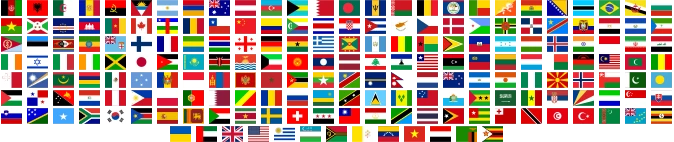
This movement is not an effort to export Haitian culture to the world.
It is not a Haitian movement, an American movement, or a movement belonging to any single nation, ethnicity, religion, political philosophy, or culture.
It begins with something much simpler and much more personal:
Thank you.
I was born with Haitian roots, and that heritage will always be part of my story. Through my music, particularly Kompa, Haitian musical culture naturally travels with me.
But America is also an essential part of my story.
America is where I was raised, where I was educated, where I established my career, and where I received opportunities that eventually allowed me to travel beyond its borders and experience the wider world.
That contribution must be acknowledged with gratitude.
And as I traveled, country after country and city after city welcomed me.
Sometimes that welcome was significant. Sometimes it was simply a person saying hello.
A smile. A handshake. A meal. A business meeting. A conversation. A hotel room after a long journey. A stranger offering directions. A family opening a door. A city allowing me to experience another way of life.
Each encounter became part of my journey.
Therefore, this initiative begins as one artist going back through the journey of his life to say thank you to the people and places that welcomed him along the way.
Not to tell those countries what their culture should be.
Not to replace their culture with mine.
Not to export one country's identity into another.
But to say:
Thank you for receiving me.
Thank you for allowing me to experience your country.
Thank you for becoming part of my life's journey.
From Personal Gratitude to Global Gratitude
The first chapter should begin with the places that have an authentic connection to my own life.
These are places I visited, lived in, worked in, traveled through, or remember because of the people I encountered there.
That authenticity matters.
We should not pretend that I have a personal connection to every country in the world when I do not.
Instead, we begin with the truth.
These are the places that touched my life.
And I am returning, through music, storytelling, friendship, cultural appreciation, and gratitude, to say thank you.
But that is only the beginning.
Once this tradition is established, the circle can grow. Other countries can participate. Other cities can participate. Other artists can participate. Other families can participate. Other generations can participate.
Eventually, the original personal journey can become something much larger:
International Week of Gratitude
One week every year when humanity is encouraged to remember the people and places that helped us along our journeys and simply say: Thank you.
Through music. Through food. Through art. Through friendship. Through storytelling. Through cultural exchange. Through community service. Through a handshake. Through a telephone call. Through a visit. Through remembering someone who helped us years ago. Through one country acknowledging another. Through one generation thanking the generation that came before it.
The expression can change. The principle should remain: Gratitude.
A 1,000-Year Tradition
The ambition is not to create an event that disappears when its founder is gone.
The ambition is to establish a tradition.
My generation begins it. The next generation carries it. Their children carry it. And the generations after them continue carrying it.
The mandate is simple:
For the next 1,000 years, take one week each year to say thank you to the world.
Future generations should be free to adapt the music, technology, languages, cities, celebrations, and methods of participation to their own time. They should not be required to imitate the founder. They should be asked to preserve the principle.
Remember where you came from. Remember who helped you. Remember the places that welcomed you. And say thank you.
Technology will change. Music will change. Countries may change. Cities will change. Generations will change. But gratitude does not become obsolete.
The Role of Culture
Every participating country should be encouraged to present its own culture.
When we visit Senegal, we should listen to Senegal. When we visit China, we should listen to China. When we visit Mexico, we should experience Mexico. When we visit Belgium, we should appreciate Belgium. When we visit the Netherlands, we should appreciate the Netherlands. When we visit America, we should acknowledge America's contribution to the journey.
And when Haiti is celebrated, Haiti should be celebrated authentically as well.
Kompa remains part of my artistic identity, but it should function as one musical voice traveling in friendship, not as a declaration that the movement belongs to Haiti.
The principle is reciprocity:
I bring my song. You share your song. We listen to one another.
That is cultural exchange.
America's Place in the Story
America deserves explicit acknowledgment.
It should never appear that the international journey materialized without the foundation that made much of that journey possible.
America was where I was raised and educated. It was where I built a career. It provided opportunities from which international travel and international relationships became possible.
Therefore, gratitude to America is not a footnote. It is part of the founding story.
Likewise, gratitude to Haiti remains part of the story because heritage, family, memory, and Kompa helped shape the artist who eventually traveled that world.
These truths do not compete with one another. They belong to the same life.
No Country Owns Gratitude
Ultimately, the International Week of Gratitude should belong to humanity.
It should never become: “Haiti thanking the world.”
It should never become: “America thanking the world.”
It should never become: “TimTim.Live teaching the world gratitude.”
The founding story is simply:
One person decided to go back and thank the world that helped shape his life.
Then he invited others to do the same.
That is how something personal can become universal.
The Founder's Promise
I cannot personally thank every human being who has helped me. I cannot return every handshake. I cannot remember every face. I cannot revisit every conversation.
But I can remember what those encounters meant.
And I can create something that says, on my behalf: I did not forget.
To the countries that received me: Thank you.
To the cities that welcomed me: Thank you.
To America, which gave me opportunities to build a life, establish a career, and travel: Thank you.
To Haiti, whose heritage and music remain within my artistic voice: Thank you.
To the strangers who smiled: Thank you.
To the people whose names I no longer remember: Thank you.
To those who simply said hello: Thank you.
And to the generations who will inherit this tradition:
Please continue it.
Not for me. Not for one country. Not for one culture. But for humanity.
The 1,000-Year Mandate
Once every year, for one week, remember.
Remember the people. Remember the places. Remember the opportunities. Remember the kindness. Remember the journey.
Then say: Thank you.
And when your generation is finished, hand that responsibility to the next.
For 1,000 years.
And perhaps, when those 1,000 years have passed, another generation will decide that gratitude deserves another thousand.